Auditambassadeur
Uit het kenniscentrum van Metaware.
Zoekwoorden: Auditambassadeur,compliance, conformiteit, kwaliteit, managementsysteem, kwaliteitsmanagement, ISO, ISO 9001, ISO 27001, NEN 7510, control framework
.
Auditambassadeur, zijn werkwijze
Een auditambassadeur is een medewerker die binnen een organisatie de brug vormt tussen de auditors en de rest van het team. Hij of zij bevordert begrip en draagvlak voor audits en helpt collega’s bij het naleven van kwaliteits- en compliance-eisen. Een auditambassadeur zorgt dat auditbevindingen niet als controle, maar als verbeterkansen worden gezien. De auditambassadeur heeft kennis van (ISO-)normen en vertaalt deze naar praktische handvatten voor de werkvloer. Daarnaast stimuleert de ambassadeur een cultuur van transparantie en continue verbetering. De auditambassadeur fungeert vaak als aanspreekpunt voor vragen over auditprocessen en kwaliteitsrichtlijnen. Hij of zij bereidt afdelingen voor op interne of externe audits. Ook verzamelt de ambassadeur bewijsmateriaal en documentatie die nodig zijn tijdens de audit, bijvoorbeeld in een control framework. Een belangrijk onderdeel van het werk is het delen van best practices tussen teams. De auditambassadeur onderhoudt nauwe samenwerking met de kwaliteitsmanager en (externe) auditors. Verder analyseert hij of zij auditresultaten en helpt bij het opstellen van verbeterplannen. De auditambassadeur zorgt ervoor dat auditdoelen worden ingebed in het dagelijks werk. Tot slot draagt deze rol bij aan een organisatie die leert, verbetert en vertrouwen uitstraalt richting toezichthouders, certificerende instanties en klanten.
Auditambassadeur, zijn taken en verantwoordelijkheden
Een auditambassadeur is een voorvechter van effectieve audits binnen een organisatie en bevordert naleving, kwaliteit en verbetering. Hij of zij fungeert als brug tussen auditors, het management en medewerkers. Een auditambassadeur zorgt voor duidelijke communicatie, betrokkenheid van teams en een cultuur van continue verbetering.
Taken en verantwoordelijkheden:
- Stimuleert betrokkenheid bij audits door alle lagen van de organisatie mee te nemen.
- Verduidelijkt doel en werking van audits voor medewerkers en teams.
- Verzamelt en verspreidt relevante informatie, zodat audits onafhankelijk en objectief kunnen plaatsvinden.
- Ondersteunt bij het voorbereiden van documenten, procedures en checklists.
- Helpt bij het implementeren van aanbevelingen uit auditrapporten.
- Draagt bij aan het opbouwen van vertrouwen tussen auditors en de organisatie.
- Zorgt voor een transparante aanpak, zodat afwijkingen eerlijk worden vastgesteld en besproken.
- Bevordert een cultuur waarin fouten snel worden herkend en rechtgezet.
- Bewaakt dat audits aansluiten bij relevante normen (bijv. ISO, NEN) en interne richtlijnen.
- Draagt bij aan risicobeoordeling en prioritering van verbeteracties.
- Monitoren van voortgang van audit-gerelateerde acties en deadlines.
- Communiceert bevindingen op een begrijpelijke, constructieve manier.
- Zorgt voor continuïteit door standaardisatie van auditprocessen.
- Stimuleert samenwerking tussen verschillende afdelingen bij audits.
- Helpt bij het opzetten van een auditkalender en deadlines.
- Draagt bij aan objectieve rapportage door neutrale houding en open verslaggeving.
- Verzekert privacy en vertrouwelijkheid van bevindingen en data.
- Draagt bij aan de ontwikkeling van auditvaardigheden binnen het team.
- Zorgt voor follow-up: controleren of verbetermaatregelen effectief zijn toegepast.
Kortom: een auditambassadeur heeft een verbindende rol, zorgt voor duidelijke communicatie, en faciliteert van voorbereiding tot uitvoering en opvolging van audits, zodat de organisatie leert en groeit.
Auditambassadeur, zijn tooling
De tooling van een auditambassadeur vormt het fundament voor een gestructureerde en betrouwbare auditcultuur. Een belangrijk uitgangspunt is dat alle documentatie actueel, toegankelijk en eenduidig is, zodat niemand werkt met verouderde informatie. Digitale kwaliteitsmanagementsystemen helpen de ambassadeur om beleid, procedures en auditverslagen centraal te beheren. Door gebruik te maken van uniforme registraties kunnen alle betrokkenen op dezelfde manier gegevens vastleggen, wat de vergelijkbaarheid en traceerbaarheid van informatie versterkt. Dit voorkomt ruis in communicatie en bevordert consistentie in de uitvoering van verbetermaatregelen. De auditambassadeur gebruikt daarnaast workflowtools die statusbewaking mogelijk maken, zodat duidelijk is welke acties nog openstaan en wie verantwoordelijk is voor de opvolging. Automatische meldingen en dashboards ondersteunen het tijdig signaleren van knelpunten. Ook biedt goede tooling inzicht in trends over meerdere audits, waardoor structurele verbeteringen beter kunnen worden aangestuurd. De auditambassadeur zorgt ervoor dat deze systemen goed worden gebruikt en dat collega’s weten waar ze informatie kunnen vinden. Een effectief control framework vormt de samenhang tussen alle onderdelen van de audittooling. Hierin worden risico’s, beheersmaatregelen, verantwoordelijkheden en resultaten met elkaar verbonden (opzet - bestaan - werking). Dit control framework maakt het mogelijk om niet alleen te controleren, maar vooral te sturen op kwaliteit en compliance. Voor de auditambassadeur is het daarmee een strategisch hulpmiddel dat inzicht, overzicht en verantwoording combineert.
Control framework, waarom nuttig
Een control framework is een gestructureerd raamwerk waarin alle beheersmaatregelen van een organisatie systematisch zijn vastgelegd, gemonitord en beheerd. Het biedt inzicht in hoe risico’s worden geïdentificeerd, gecontroleerd en beperkt binnen processen, systemen en beleid. Binnen een norm als ISO 27001 helpt een control framework om de vele beveiligingsmaatregelen overzichtelijk te organiseren en te koppelen aan specifieke risico’s en verplichtingen. Hierdoor wordt duidelijk welke controles nodig zijn om informatiebeveiliging effectief te waarborgen en of de werking effectief is. Het framework fungeert als een soort kaart die laat zien waar de organisatie goed scoort en waar nog verbeteringen nodig zijn. Door de samenhang tussen maatregelen en risico’s zichtbaar te maken, voorkomt het dubbel werk en inconsistenties. Voor auditors en auditambassadeurs vormt het framework een krachtig hulpmiddel om naleving en effectiviteit van controles te beoordelen. Het zorgt er ook voor dat audits sneller kunnen verlopen en maakt de communicatie eenvoudiger. Kortom, een control framework biedt grip, transparantie en betrouwbaarheid in het beheer van risico’s en complianceverplichtingen.
Control framework ISO 27001 als voorbeeld
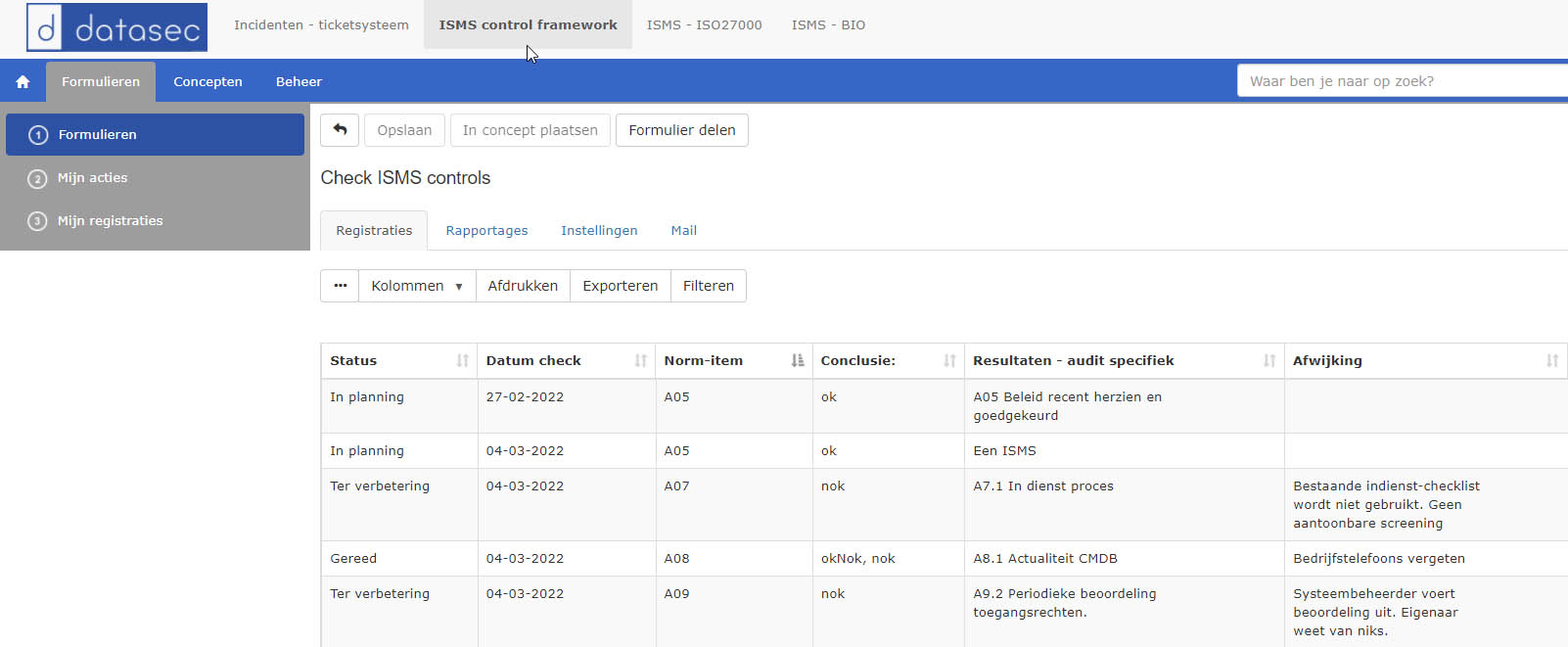
Als voorbeeld is een ISMS -Information Security Management System- control framework uitgewerkt, gericht op de ISO 27001, Annex A. Een set van 95 beheersmaatregelen gericht op informatiebeveiliging, indien van toepassing.
Binnen het managementsysteem platform is het ISMS control framework een onderdeel. Periodiek wordt hier vastgelegd wat de toetsingsresultaten van de effectiviteitscontroles van de betreffende beheersmaatregelen (controls) zijn. Groot voordeel is dat er directe links met het beschreven managementsysteem en de verschillende kwaliteitsregistraties of KPI-metingen zijn.
Klik hier voor het ISO 27001:2022 ISMS control framework van onze business partner meta-audit.nl