Safety Culture Ladder certificering
Safety Culture Ladder certificering, hoe?
In steeds meer sectoren is aantoonbaar veilig werken geen keuze meer, maar een harde eis vanuit opdrachtgevers en ketenpartners. Organisaties die investeren in veiligheid bouwen aan vertrouwen, continuïteit en een sterkere marktpositie. De vraag naar bedrijven met een aantoonbaar volwassen veiligheidscultuur groeit snel binnen bouw, infra, industrie en techniek. Met een professionele aanpak van veiligheid laat een organisatie zien dat medewerkers centraal staan. Juist daarom wordt safety culture ladder certificering steeds vaker opgenomen in aanbestedingen en contractvoorwaarden. Bedrijven zonder certificering lopen daardoor steeds vaker commerciële kansen mis. Was al trede 2 veel gevraagd vanaf 1 januari 2022; vanaf 1 juli 2026 is trede 3 de minimale eis voor ViA-aanbestedingen.
Een sterke veiligheidscultuur leidt bovendien tot minder uitval, hogere betrokkenheid en betere operationele prestaties. Organisaties die veiligheid serieus nemen, onderscheiden zich zichtbaar van concurrenten die alleen voldoen aan minimale wetgeving. Certificering toont aan dat veiligheid niet alleen op papier staat, maar daadwerkelijk leeft binnen de organisatie. Medewerkers voelen zich verantwoordelijker en spreken elkaar sneller aan op veilig gedrag. Ook leveranciers en onderaannemers worden steeds kritischer beoordeeld op veiligheidsbewustzijn en samenwerking. Hierdoor groeit de noodzaak om processen, gedrag en leiderschap structureel te borgen.
Een succesvolle implementatie van safety culture ladder certificering vraagt om continue monitoring, communicatie en verbetering. Losse documenten en statische mappenstructuren zijn hiervoor vaak onvoldoende en raken snel verouderd. Organisaties hebben behoefte aan realtime inzicht in meldingen, audits, toolboxen, acties en verbeterpunten. Alleen dan ontstaat een cultuur waarin veiligheid continu zichtbaar en meetbaar blijft. Daarom is een ‘levend’ digitaal managementsysteem tegenwoordig onmisbaar voor organisaties die serieus werk maken van veiligheidscultuur. Zo’n systeem verbindt processen, medewerkers en managementinformatie in één centrale omgeving. Hiermee wordt niet alleen voldaan aan audit- en compliance-eisen, maar ontstaat ook een duurzaam fundament voor groei, vertrouwen en succesvolle safety culture ladder certificering. En dat is weer makkelijk te borgen met VMS software
De ladder verdeelt het veiligheidsbewustzijn en veiligheidsgedrag over vijf treden:
| Trede 1 Pathologisch |
- 'als we maar aan de wet voldoen'
- 'bij ons gaat niks fout'
- 'geen tijd verdoen met preventieve dingen'
- 'wat niet weet, wat niet deert'
|
| Trede 2 Reactief |
- Pas veranderen NADAT iets is misgegaan
- Reactie op basis van ingesleten patronen
- Niet vooruitdenken
|
| Trede 3 Berekenend |
- Neemt verantwoordelijkheid maar eigen belang voorop
- Bepaalde veiligheidsregels zijn belangrijk
- Er zijn systemen om risico's te beheersen
- Betrokkenheid vooral bij (hoger) management
|
| Trede 4 Proactief |
- Continue investering in veiligheidsbewustzijn
- Veiligheid heeft een hoge prioriteit
- Problemen worden aangepakt
- Er wordt vooruitgedacht en initiatief genomen
|
| Trede 5 Vooruitstrevend |
- Veiligheid is volledig geïntegreerd
- Veiligheid komt in alle bedrijfsprocessen voor
- Veiligheid wordt hoog gewaardeerd
- Iedereen houdt zicht eraan
|
Safety Culture Ladder certificering, geen 'checklist'
De veiligheidsladder richt zich op cultuur en zeker ook het gedrag binnen een organisatie. Het is niet een checklist uit een handboek, die als een ingesleten patroon moet worden nageleeft. Simpel af te vinken met een checklist: ja, nee of niet van toepassing. Niet dus.
Vanuit 6 bedrijfsaspecten, die weer zijn onderverdeeld in 18 bedrijfskarakteristieken, wordt de totale prestatie beoordeeld met een score.
- Leiderschap en betrokkenheid
Karakteristieken: Managementinteresse, medewerkersbetrokkenheid, prestatiebeloningen
- Beleid en strategie
Karakteristieken: Veroorzakers ongevallen, winstgevendheid en continuïteit
- Organisatie en opdrachtnemers
Karakteristieken: Opdrachtnemers, competentie en opleiding, afdeling V&G
- Werkplek en procedures
Karakteristieken: Werkplanning, werkplekveiligheid, procedures
- Afwijkingen en communicatie
Karakteristieken: Melding, onderzoek en opvolging van incidenten, dagelijkse controle, bijeenkomsten
- Audits en statistieken
Karakteristieken: Audits en reviews, trends en statistieken
Elke trede kent een minimum aantal punten. Om naar een hogere trede te gaan moet aan alle eisen binnen een trede worden voldaan.
Safety Culture Ladder certificering = 'levend' managementsysteem
Om alle bedrijfaspecten van de veiligheidsladder te kunnen managen is een integraal (veiligheids)managementsysteem nodig:
- Beleid vastleggen, authoriseren en communiceren
- Taken, verantwoordelijkheden en bevoegdheden vastleggen en communiceren
- Procedures opstellen en communiceren zonodig met leesbevestiging
- Incidenten beoordelen en evalueren en actie ter verbetering opvolgen
- Inspecties en audits systematisch uitvoeren en afwijkingen oplossen
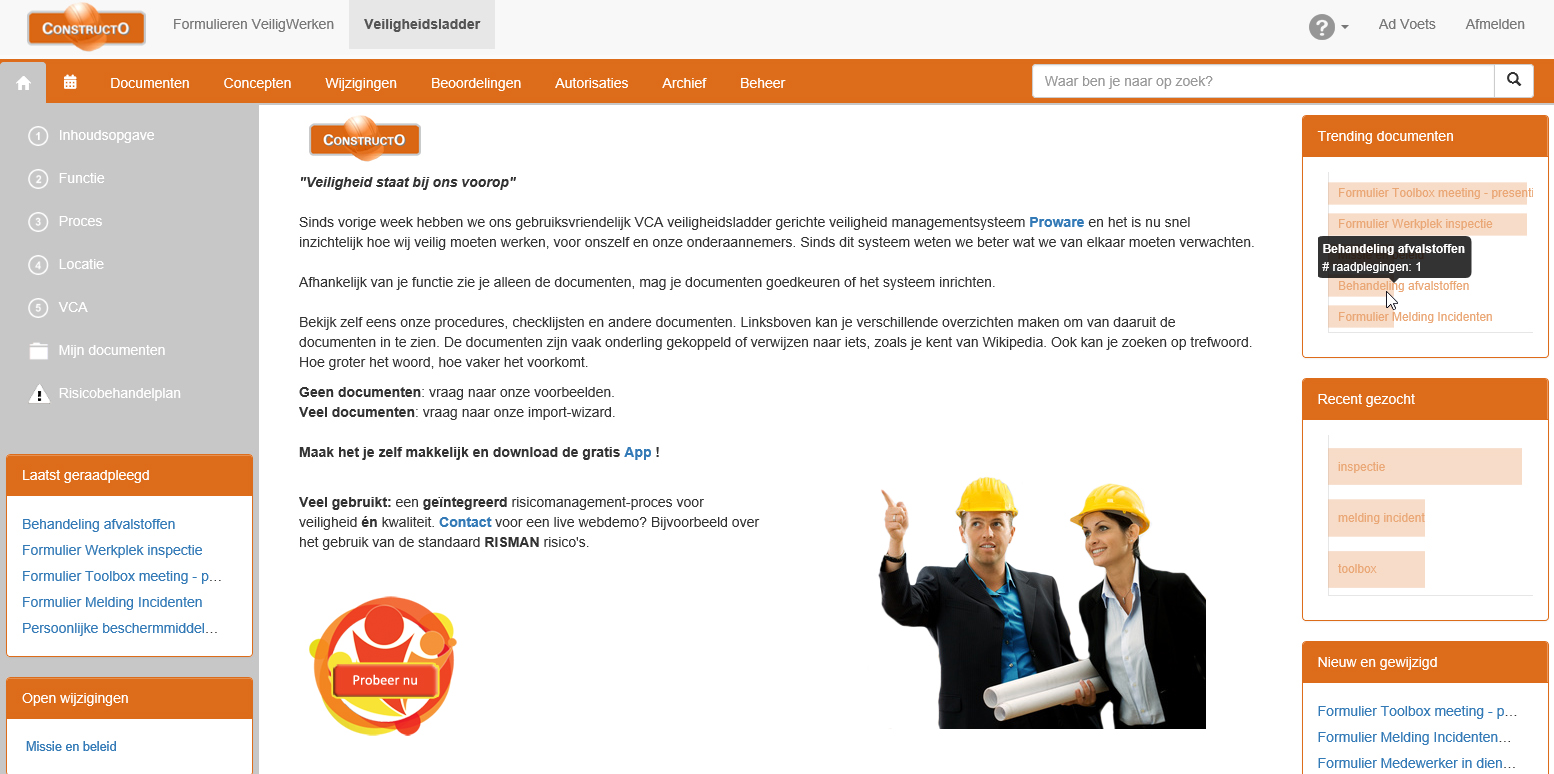
Een digitaal (veiligheids)management systeem kan zoveel meer, niet te vergelijken met de al om bekende 'VCA checklist'. (Zet voor de aardigheid als proef onderstaande cloudoplossing eens in 60 seconden online ....)
En zoek de verschillen met de bekende 'checklist' ...