Wat is een audit
Wat is een audit. Een audit binnen de context van ISO managementsysteem normen is een systematisch, onafhankelijk en gedocumenteerd proces om te bepalen of activiteiten en resultaten voldoen aan vastgestelde eisen. Het doel is om inzicht te krijgen in de effectiviteit van het managementsysteem en om kansen voor verbetering te identificeren. Wat is een audit? Het is een instrument waarmee organisaties kunnen toetsen of hun processen voldoen aan de normvereisten, zoals ISO 9001 (kwaliteit) of ISO 27001 / NEN 7510 (informatiebeveiliging). Interne en externe audits spelen een cruciale rol in het waarborgen van continue verbetering. Auditors beoordelen of het beleid, procedures en praktijken in lijn zijn met de afgesproken normen. Wat is een audit nog meer? Het is ook een middel om transparantie en vertrouwen te bevorderen bij belanghebbenden. Door regelmatig te auditen, kan een organisatie risico’s beheersen en aantonen dat zij haar verplichtingen serieus neemt. Zo draagt een audit bij aan het behouden of verkrijgen van certificering.
Het woord audit is afgeleid van een Latijnse woord "audire", wat betekent "om te horen". Audit tools of interne audit software maken het efficiënter.
Er zijn verschillende soorten audits: financieel, operationeel, IT, kwaliteit, milieu, .. Alles gericht is op de opzet, bestaan en werking van informatie-, communicatie- en controle systemen.
Wat is een audit - het proces
Wat is een audit vanuit een procesbenadering? Een audit is een activiteit waarbij de risico’s of tekortkomingen in een proces of organisatie worden geïdentificeerd. Voldoet een proces of organisatie aan het referentiekader, meestal een norm. Er wordt nagegaan in welke mate de bestaande beheersmaatregelen de risico's voldoende dekken.
De auditor die de audit uitvoert, dient onafhankelijk zijn. Een belangrijke eis. Het is van belang dat de auditor geen processen beoordeelt waar hij zelf verantwoordelijk voor is en dus geen belang heeft bij de resultaten van de audit. De werkwijze bij een audit kan per keer verschillen.
In het algemeen bestaat het uit de volgende processtappen:
- Voorbereiding
Op basis van een eerder opgesteld auditprogramma wordt voor de specifieke audit een agenda opgesteld. Wat komt aan bod en wat niet. Het managementsysteem of delen daarvan worden doorgenomen en er wordt bekeken wat de resultaten waren van de vorige audits. Zijn alle verbeteringen effectief geïmplementeerd?
- Uitvoering
Tijdens de audit onderzoekt de auditor of de organisatie of het proces aan de eisen van een norm voldoet op basis van bewijs. De auditor verzamelt hiervoor informatie zoals documenten en registraties en beoordeelt operationele (monitoring)systemen. Daarnaast kan informatie worden verkregen door waarnemingen van de auditor en interviews met werknemers. De auditor controleert en beoordeelt de informatie. Kan worden aangetoond dat de auditee zegt wat hij doet, en dat hij doet wat je zegt?
- Rapporteren
Alle bevindingen, afwijkingen van de norm of verbetersuggesties, worden verzameld en vastgelegd in een auditrapport. Besproken onderwerpen, aandachtspunten en tekortkomingen zijn hierin beschreven en deze worden besproken met de auditee. Ook worden corrigerende maatregelen vastgelegd. Over de feiten mag geen onduidelijkheid zijn.
- Opvolging
Als er in het auditverslag corrigerende maatregelen zijn voorgesteld, dient de auditee deze uit te voeren. In een volgende audit, bijvoorbeeld een herhalingsaudit, kan dan worden beoordeeld of deze corrigerende maatregelen effectief zijn doorgevoerd.
Een heel specifiek proces dus. Voor de uitvoering steunen we daarom op onze business partners van meta-audit.nl.
Klik hier voor hun audit vragenlijst.
Wat is een audit - de tooling
Wat is een audit voor de tooling is iets wat aan snelle ontwikkelingen onderhevig is.Zo zijn remote audits snel de praktijk geworden, zeker voor externe audits. Ook in de audit tooling is veel mogelijk.
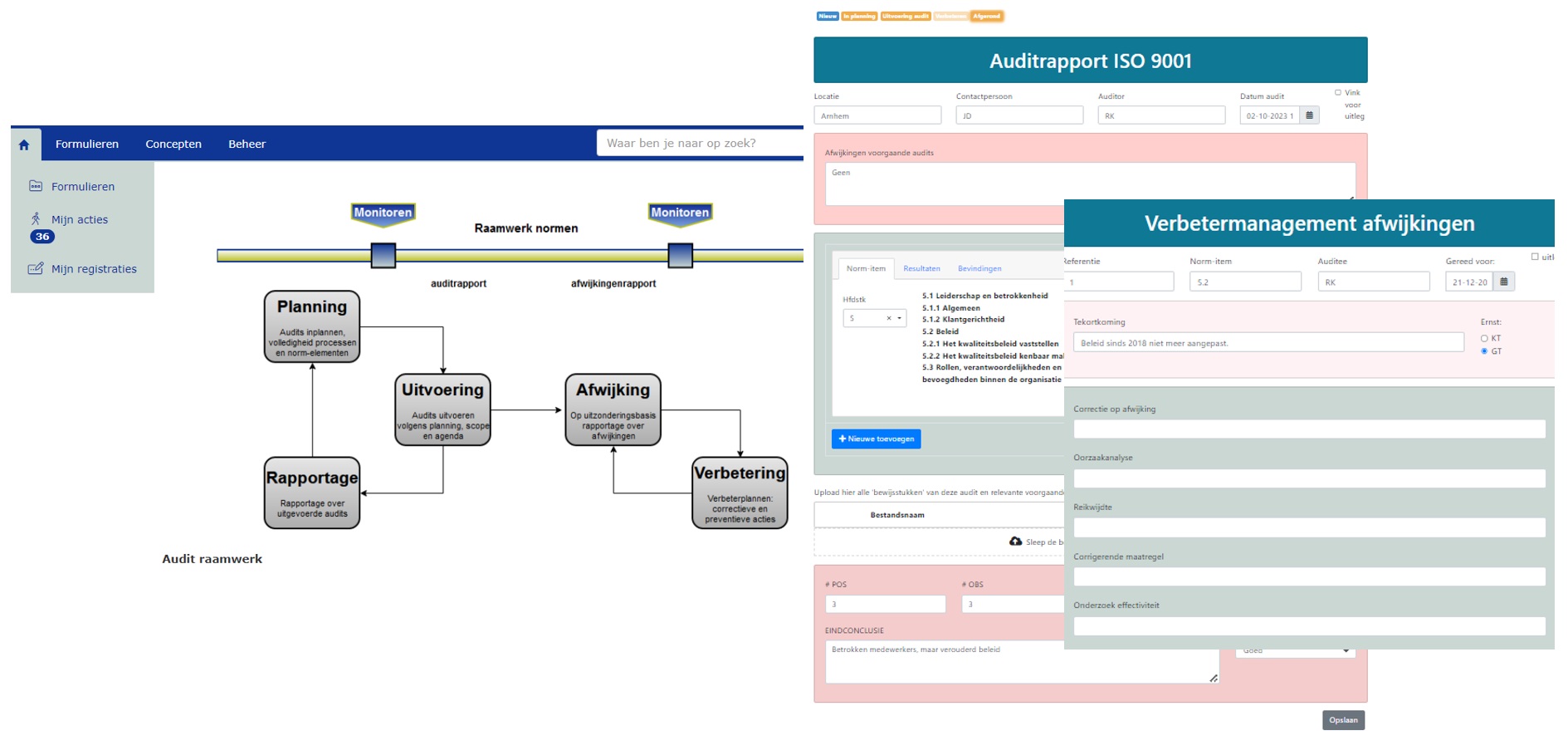
Bekijk eens dit overzicht van 'standaard' functionaliteiten van een digitaal managementsysteem, ingericht voor audits.
(Zet voor de aardigheid als proef dit Infoware-systeem eens in 60 seconden online ....)
Planning
Audit frame work |
- Vooraf audits inplannen
- Tijdige attendering
- Inzicht en overzicht
- Check op compleetheid normeisen
- Toelichting normeisen
- Voortgangsbewaking
|
| Workflow sturing |
- Duidelijke processtappen
- Audittrail
- Overzicht actuele status
- Flexibele workflow
|
| Uitvoering |
- In te richten per audit type
- Eén raamwerk, meerdere normen
- Ook voor mobiele devices
- Korte doorlooptijden
|
| Monitoring |
- Dashboard
- Multisite
- Details én totaalbeeld
|
Voor wie nog steeds aan het ‘vechten’ is met losse documenten, lange doorlooptijden of onduidelijk voortgang ....
Zet in 60 seconden onze cloudoplossing Infoware klaar, software tool voor managementsystemen. En zoek de verschillen ...