Software werkplek inspecties
Begin niet meteen met een online werkplek inspectie formulier. Om een goede werkplekinspectie uit te kunnen voeren moeten aan een aantal voorwaarden worden voldaan. De belangrijkste voorwaarden voor een werkplekinspectie zijn:
- Planning inspecties afgestemd op kritische veiligheidsaspecten
- Voldoende getrainde en onafhankelijke inspecteurs
- Draagvlak van management
- Voldoende voorbereiding
- Doorvragen in interviews voor voldoende diepgang
- Effectieve rapportage met aandacht voor verbeteringen
- Werkplekinspecties worden als management tool gebruikt
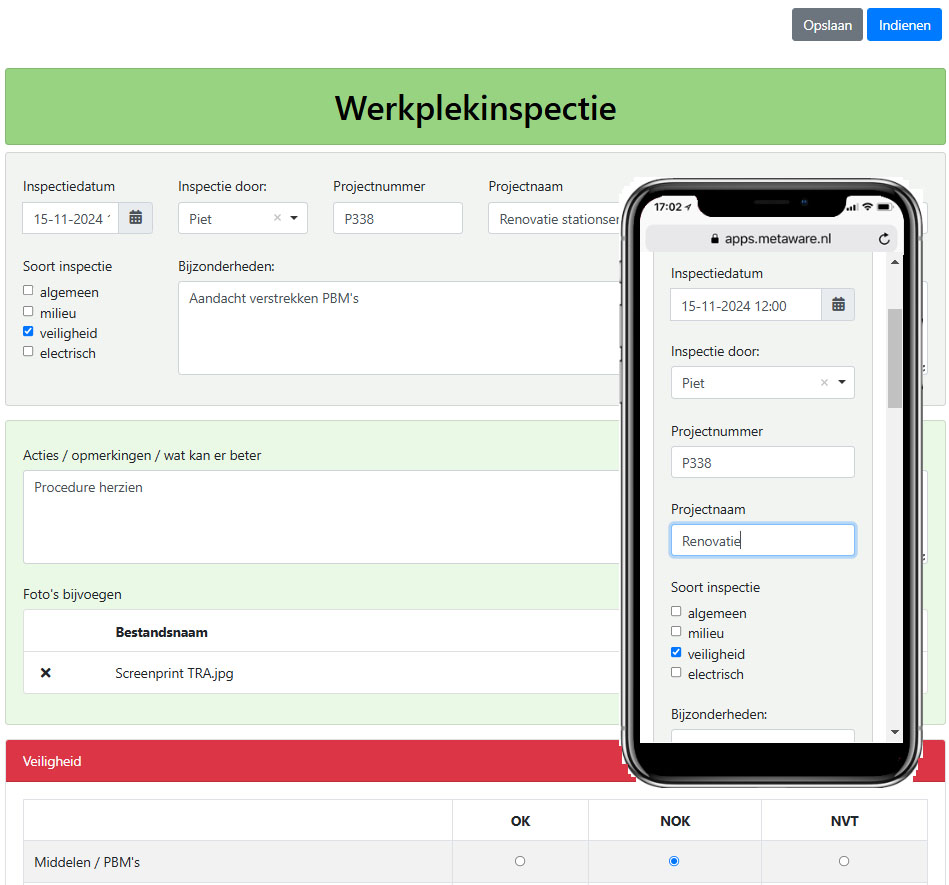
Voor de registraties bij een werkplekinspectie kunnen formulieren worden gemaakt: planning inspecties of inspectieschema, werkplek inspectieprogramma, inspectierapport, afwijking (non-conformity). Op de verschillende momenten in het inspectieproces dient iets geregistreerd te worden. Een online workflow formulier is dan simpel gezegd noodzakelijk. Software maakt het makkelijk.
[Klik hier voor een praktische toelichting. Klik op afbeelding voor de demo-omgeving]
Software Meld onveilige situatie
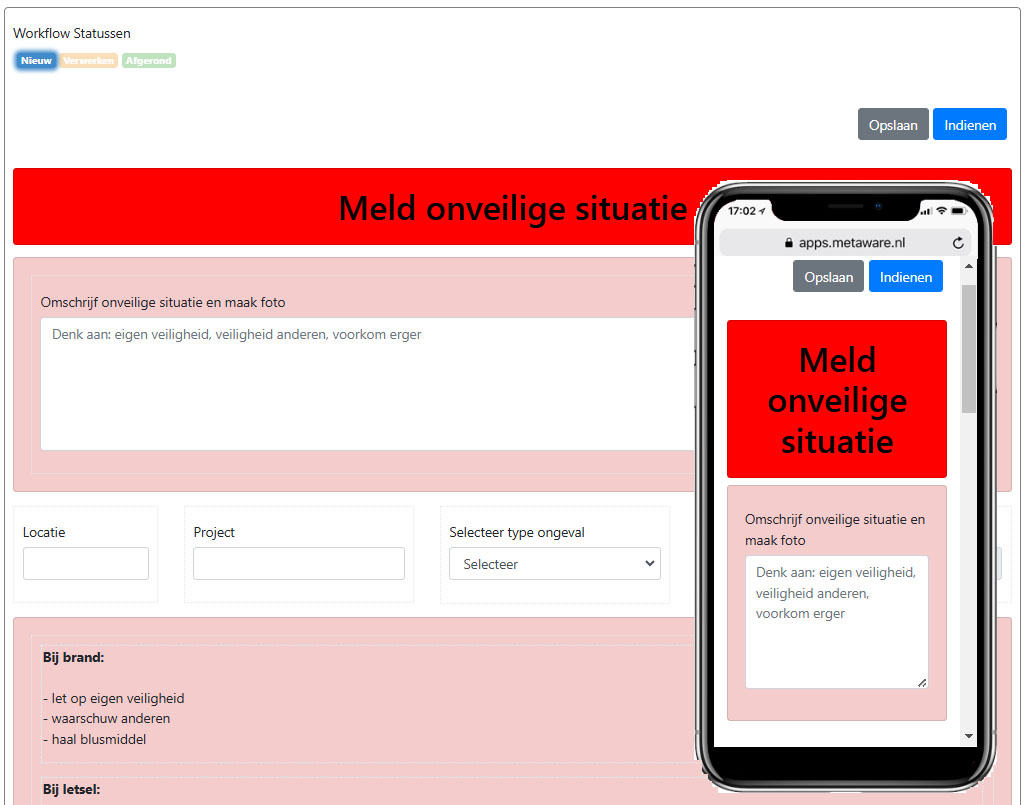
Het snel melden van een onveilige situatie is cruciaal om direct risico's voor de veiligheid en gezondheid van personen te minimaliseren. Door vroegtijdig te rapporteren, kunnen passende maatregelen worden genomen om ongelukken of schade te voorkomen. Dit draagt bij aan een veilige werkomgeving, voorkomt escalatie van problemen en bevordert een cultuur van verantwoordelijkheid en proactief handelen.
Voor het melden van onveilige situatie kunnen eenvoudig, zelf formulieren worden gemaakt: hoe en wat registreren, snel foto's toevoegen en op welke wijze escaleren. De software maakt het makkelijk.
[Klik hier voor een praktische toelichting. Klik op afbeelding voor de demo-omgeving]
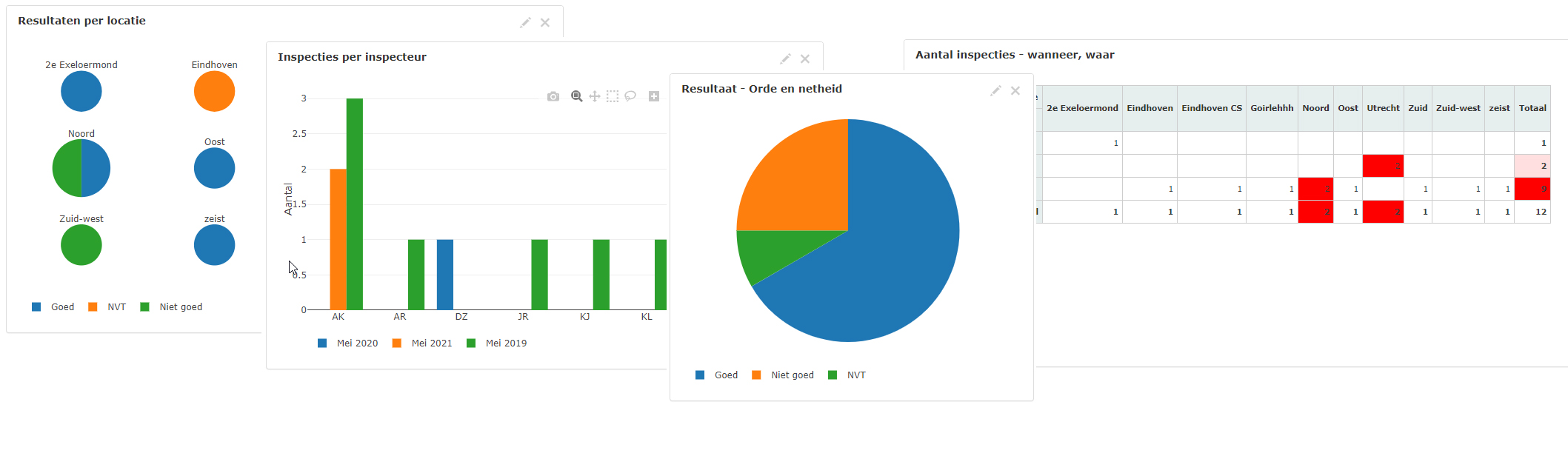
Door bijvoorbeeld de werkplekinspecties en melding onveilige situatie direct in een digitaal formulier vast te leggen, zijn deze gegevens ook direct beschikbaar en kan (meteen) actie worden ondernomen. In grafieken of tabellen is de voortgang ook inzichtelijk. Daarnaast is het meteen duidelijk waar de knelpunten zitten en kan management daarop anticiperen.
Wat zijn de inspectieresultaten per locatie? Welke inspecteur voert welke inspectie uit en wanneer? En wat zijn natuurlijk de resultaten. Hoe zit het met de voortgang van de inspecties per regio of locatie?
'Meten is weten', tenslotte.
[klik op afbeelding om naar de demo te gaan]